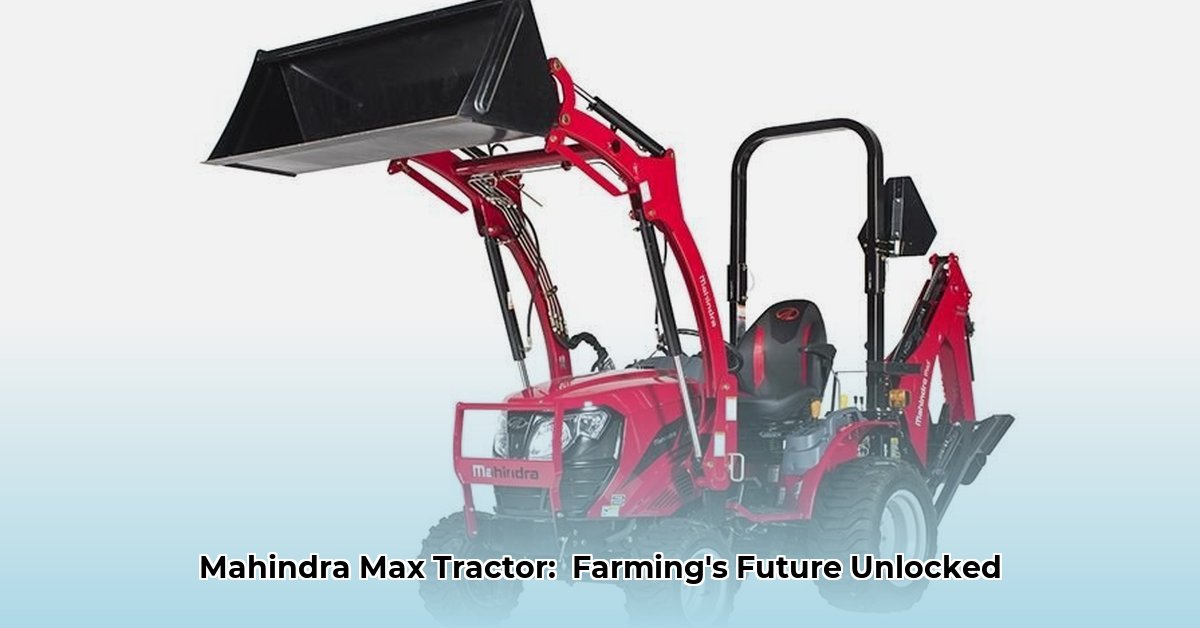
Mahindra Max Tractor Dealership: Your Partner in Sustainable Farming
Farming is undergoing a significant transformation. Consumers are increasingly conscious of sustainable food production, demanding greater efficiency and environmental responsibility from farmers. Mahindra Max tractor dealerships are uniquely positioned to meet this demand, offering solutions that promise both profitability and environmental sustainability. This isn't merely about selling tractors; it's about forging partnerships that foster a thriving, eco-conscious agricultural system. For detailed parts information, check out the Mahindra parts list.
Mahindra Tractors: Built for Efficiency and Sustainability
Mahindra's diverse tractor lineup caters to a wide spectrum of farm sizes and operations. Smaller, nimble models excel in precision agriculture, minimizing soil compaction and fuel consumption on smaller plots. Larger, more powerful machines efficiently manage extensive acreage. This versatility is crucial – different farms have distinct needs, and Mahindra provides the tools to meet them. But it’s not just about size; Mahindra's commitment to efficient engine design directly translates to lower running costs and a reduced carbon footprint. Isn't lower fuel consumption a compelling argument for environmentally conscious farmers? Improved fuel economy alone can save farmers significant capital, potentially reinvesting this savings into further farm improvements and contributing to a virtuous cycle of sustainability and profitability.
Beyond Fuel Efficiency: Precision Farming and Mahindra
Many Mahindra tractors are compatible with advanced precision farming technologies, allowing farmers to optimize their operations with unprecedented accuracy. Imagine planting seeds with pinpoint precision, minimizing waste and maximizing yield. GPS-guided tractors ensure consistent planting depth and spacing, drastically reducing overlaps and gaps. This precision translates to reduced resource use—a boon for both the farmer's bottom line and environmental protection. Mahindra Max dealerships play a vital role here, guiding farmers through the implementation of these technologies and ensuring a seamless transition to a more efficient, sustainable operation.
The Untapped Potential: Mahindra's Sustainability Story
While Mahindra tractors contribute substantially to sustainable farming practices, their marketing has yet to fully capitalize on these benefits. Many farmers remain unaware of the considerable environmental advantages of choosing Mahindra. This presents a significant missed opportunity. Mahindra possesses a powerful sustainability narrative, but it needs a stronger, clearer voice. By effectively showcasing fuel efficiency data, the advantages of precision farming, and the environmental consciousness integrated into their designs, Mahindra can resonate with a significantly broader customer base.
Actionable Steps: Growing a Greener Future
To fully realize the growing demand for sustainable agricultural practices, Mahindra requires a proactive, multi-faceted strategy encompassing several key areas.
1. Enhanced Marketing & Communication (Short-term): Develop concise, impactful marketing materials highlighting fuel efficiency, emissions data, and precision farming capabilities. Implement targeted advertising campaigns reaching environmentally conscious farmers. Collaborate with agricultural influencers and publications to raise awareness.
2. Technological Innovation & Partnerships (Long-term): Invest in R&D to develop even more eco-friendly tractors, potentially exploring alternative fuel sources. Forge stronger relationships with precision farming technology providers to seamlessly integrate their solutions with Mahindra tractors. Publish a comprehensive sustainability report, publicly demonstrating a robust commitment to environmental stewardship.
3. Dealer Empowerment & Training (Short-term): Mahindra Max dealerships should conduct workshops and training sessions for farmers, emphasizing the practical benefits of Mahindra's sustainability features, including comparative data on fuel consumption and emissions against competitors.
4. Dealer Network as Sustainability Advocates (Long-term): Dealers should become resource centers for precision farming technology, offering comprehensive support and guidance to farmers. They should actively advocate for sustainable agricultural practices within their communities.
Table: Strategic Partnerships for Enhanced Sustainability
| Partner Type | Potential Partnerships | Key Benefits |
|---|---|---|
| Precision Ag Tech Firms | GPS guidance systems, sensor technology, data analytics providers | Increased efficiency, reduced resource inputs (seeds, fertilizers, water) |
| Renewable Energy Providers | Biodiesel suppliers, solar panel installers | Reduced reliance on fossil fuels, lower operating costs, reduced emissions |
| Government Agencies | Agricultural extension services, environmental protection agencies | Access to grants, subsidies, and regulatory compliance support |
The Challenges and the Rewards
The transition to sustainable agriculture presents challenges. The initial investment in precision farming technology can be substantial. However, the long-term rewards—increased yields, lower costs, and minimized environmental impact—significantly outweigh the upfront expenses. Government incentives and financing options can mitigate these costs, making sustainable technology more accessible. Mahindra Max dealerships are ideally positioned to navigate these challenges, providing the necessary information, support, and guidance to facilitate a smoother transition for farmers.
The Future of Farming is Sustainable
Mahindra is exceptionally well-positioned to lead the sustainable agriculture revolution. By refining their sustainability messaging, strategically investing in cutting-edge technologies, and cultivating strong partnerships, Mahindra can achieve remarkable growth. The key lies in empowering Mahindra Max dealerships to become trusted advisors and partners for farmers, effectively communicating the benefits of sustainable farming and providing the support needed for success. This is how a more prosperous and environmentally responsible future is built—one farm at a time.